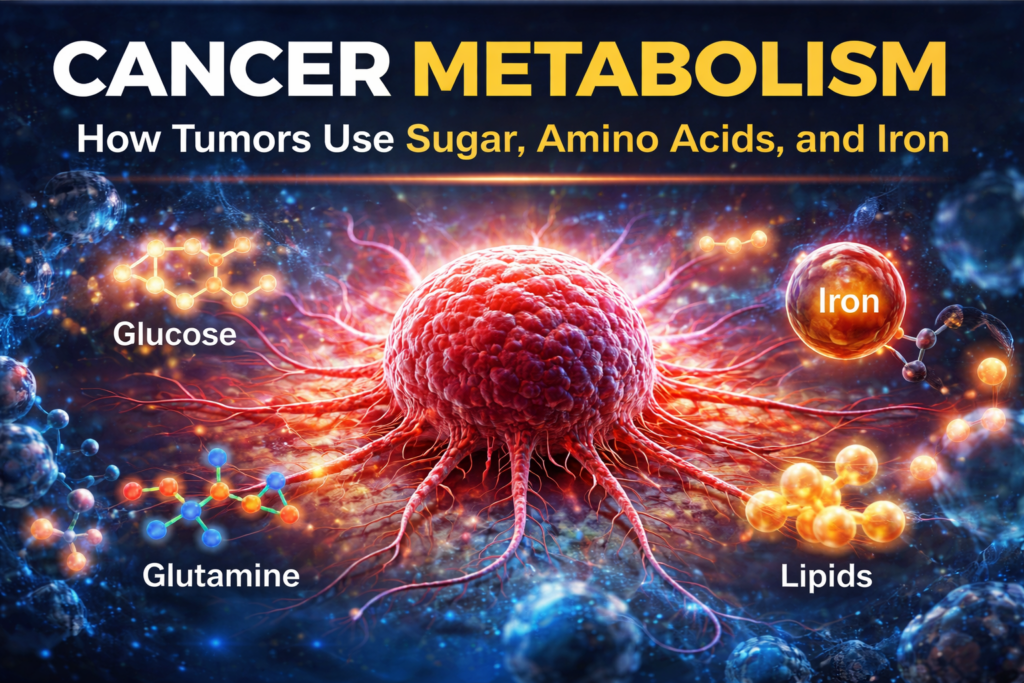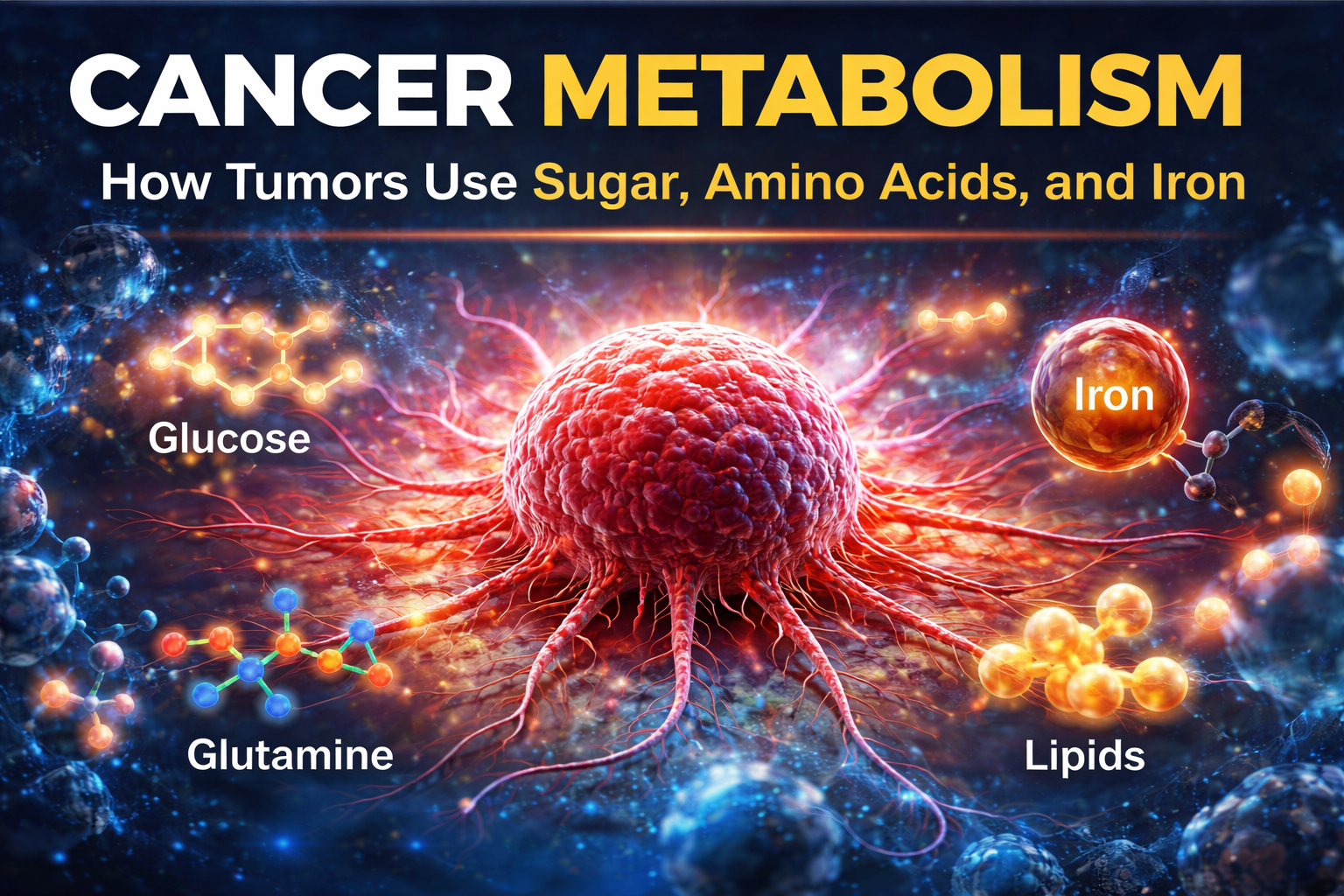
Cancer Metabolism: How Tumors Use Sugar, Amino Acids, and Iron Introduction
One of the most fascinating discoveries in modern oncology is that cancer cells use energy differently from normal cells. Instead of following the efficient metabolic pathways used by healthy tissue, tumors often reprogram their metabolism to support rapid growth, survival, and resistance to treatment.
This altered energy system is known as cancer metabolism.
Cancer cells consume enormous amounts of nutrients including:
- Glucose (sugar)
- Amino acids like glutamine
- Iron
- Fat molecules (lipids)
These nutrients fuel tumor growth and help cancer cells survive in hostile environments such as low oxygen conditions, immune attack, and chemotherapy exposure.
Understanding cancer metabolism has become a major focus of cancer research because it may reveal weaknesses that can be targeted by treatments.
In this guide, we explain how cancer cells alter metabolism and explore four major metabolic systems involved in tumor growth:
- Glycolysis (sugar metabolism)
- Glutamine addiction
- Iron metabolism
- Lipid metabolism
What Is Cancer Metabolism?
Cancer metabolism refers to the biochemical processes cancer cells use to generate energy and build cellular components.
All cells require energy to survive. Normally, cells generate energy using mitochondria through a process called oxidative phosphorylation, which efficiently produces ATP using oxygen.
However, many cancer cells rely heavily on a less efficient process called glycolysis, even when oxygen is available.
This phenomenon was first described by Nobel Prize–winning scientist Otto Warburg and is now known as the Warburg Effect.
Learn more here:
Internal Link
https://helping4cancer.com/warburg-effect-cancer-metabolism-2/
Because tumors grow quickly, they require:
- Large amounts of energy
- Building blocks for DNA and proteins
- Molecules needed to construct cell membranes
To meet these needs, cancer cells reprogram metabolic pathways to consume more nutrients than normal cells.
Glycolysis: The Sugar Addiction of Cancer
One of the most well-known features of cancer metabolism is glycolysis.
Glycolysis is the process of breaking down glucose (sugar) to generate energy.
In healthy cells:
- Glycolysis occurs in the cytoplasm
- Most energy production happens later in mitochondria
However, many cancer cells rely on glycolysis even when oxygen is present.
This metabolic shift provides several advantages to tumors.
Why Tumors Prefer Glycolysis
Cancer cells benefit from glycolysis because it:
• Produces energy rapidly
• Generates metabolic building blocks
• Supports rapid cell division
• Allows survival in low oxygen environments
Even though glycolysis is less efficient than mitochondrial respiration, its speed and flexibility make it useful for fast-growing tumors.
Because of this high glucose consumption, tumors often appear clearly on PET scans, which detect glucose uptake.
External reference:
https://www.cancer.gov/about-cancer/understanding/what-is-cancer
Glutamine Addiction in Cancer Cells
Glucose is not the only nutrient tumors depend on.
Many cancers also show glutamine addiction.
Glutamine is one of the most abundant amino acids in the body and plays a critical role in cancer metabolism.
Tumor cells use glutamine to:
- Produce energy
- Build proteins
- Generate nucleotides for DNA
- Maintain redox balance
- Support mitochondrial metabolism
Because of these functions, some tumors consume glutamine at extremely high rates.
How Glutamine Fuels Tumor Growth
Glutamine supports cancer cells by feeding into the TCA cycle, a central metabolic pathway inside mitochondria.
Through this process, glutamine helps produce:
- ATP (energy)
- Lipids
- Amino acids
- DNA building blocks
Some researchers refer to this process as glutaminolysis.
Tumors that rely heavily on glutamine include:
- Pancreatic cancer
- Lung cancer
- Colon cancer
- Certain leukemias
Because of this dependence, scientists are investigating drugs that block glutamine metabolism as potential cancer therapies.
External reference:
https://www.ncbi.nlm.nih.gov/pmc/articles/PMC5452220/
Iron Metabolism and Cancer Growth
Iron is another nutrient that cancer cells require in large amounts.
Iron plays essential roles in:
- DNA synthesis
- Oxygen transport
- Energy metabolism
- Cell division
Because tumors divide rapidly, they often increase their ability to import and store iron.
How Cancer Cells Acquire Iron
Tumor cells commonly increase expression of proteins such as:
- Transferrin receptors
- Ferritin
- Iron transport proteins
These proteins allow cancer cells to absorb iron from the bloodstream.
Iron is important because it helps enzymes perform chemical reactions required for cell replication.
However, excessive iron can also produce reactive oxygen species (ROS), which damage cells.
Learn more here:
Interestingly, scientists are exploring ways to manipulate iron metabolism to trigger ferroptosis, a type of cell death caused by iron-dependent oxidative damage.
External reference:
https://www.nature.com/articles/s41568-019-0180-8
Lipid Metabolism in Tumors
Cancer cells also rely heavily on lipid metabolism.
Lipids include fats and fat-derived molecules that serve several essential functions:
- Building cell membranes
- Storing energy
- Producing signaling molecules
Because tumors grow rapidly, they must constantly produce new cell membranes.
This requires large amounts of lipids.
How Tumors Rewire Lipid Metabolism
Cancer cells can obtain lipids in two ways:
- Absorbing fats from the bloodstream
- Producing their own fats through de novo lipogenesis
Many cancers increase activity of enzymes such as:
- Fatty acid synthase (FASN)
- Acetyl-CoA carboxylase (ACC)
These enzymes help tumors manufacture fatty acids needed for cell growth.
Lipid metabolism also influences cell signaling pathways that regulate tumor survival and metastasis.
External reference:
https://www.cell.com/cancer-cell/fulltext/S1535-6108(20)30304-3
Why Cancer Cells Reprogram Metabolism
Cancer cells face several challenges that require metabolic adaptation.
Tumors must survive in environments that often contain:
- Low oxygen (hypoxia)
- Limited nutrients
- Immune system attacks
- Chemotherapy stress
To survive these conditions, cancer cells alter their metabolism in ways that promote:
Rapid Growth
Tumor cells divide quickly and require large quantities of molecular building blocks.
Stress Resistance
Metabolic changes allow cancer cells to tolerate oxidative stress and hostile conditions.
Immune Evasion
Some metabolic byproducts can suppress immune cells in the tumor microenvironment.
Learn more:
Cancer Metabolism and Modern Cancer Treatments
Because tumors rely on altered metabolism, scientists are exploring ways to target these metabolic weaknesses.
Some therapies aim to disrupt metabolic pathways such as:
Glycolysis Inhibitors
Drugs that reduce glucose metabolism may starve tumors of energy.
Glutamine Metabolism Inhibitors
Some experimental drugs block glutamine use in cancer cells.
Ferroptosis Therapies
These approaches manipulate iron metabolism to trigger oxidative cell death.
Lipid Metabolism Inhibitors
Researchers are investigating drugs that block fatty acid synthesis in tumors.
Many of these approaches are still being studied but may play a role in future cancer treatments.
External reference:
https://www.nature.com/articles/s41571-020-0375-5
Metabolism and the Tumor Microenvironment
Cancer metabolism also influences the tumor microenvironment, the ecosystem surrounding tumors.
The tumor microenvironment includes:
- Immune cells
- Blood vessels
- Fibroblasts
- Signaling molecules
Metabolic activity can alter this environment in ways that support tumor growth.
For example:
- Excess lactate from glycolysis can suppress immune cells.
- Metabolic competition may deprive immune cells of nutrients.
- Tumor metabolism can promote angiogenesis.
These interactions help tumors survive and spread.
The Future of Cancer Metabolism Research
Cancer metabolism is now one of the most active areas of cancer research.
Scientists are exploring new strategies such as:
- Metabolic inhibitors
- Dietary interventions
- Metabolic imaging
- Personalized metabolic therapy
Understanding metabolic pathways may also improve early detection and treatment monitoring.
For example, PET scans already use metabolic activity to locate tumors by tracking glucose uptake.
As research continues, targeting metabolism could become an increasingly important component of precision oncology.
External reference:
https://www.cancer.gov/research/areas/treatment/metabolism
Conclusion
Cancer metabolism reveals how tumors reprogram cellular energy systems to support growth and survival.
Instead of relying solely on normal metabolic pathways, cancer cells often increase their use of:
- Glycolysis for rapid glucose consumption
- Glutamine metabolism for energy and biosynthesis
- Iron metabolism for DNA replication
- Lipid metabolism for membrane production
These metabolic adaptations allow tumors to grow quickly and resist hostile conditions.
However, they also expose potential metabolic vulnerabilities that researchers are working to exploit.
By understanding how cancer cells use nutrients, scientists hope to develop therapies that starve tumors of the resources they need to survive.
Cancer metabolism remains one of the most promising frontiers in the fight against cancer.
Table of Contents